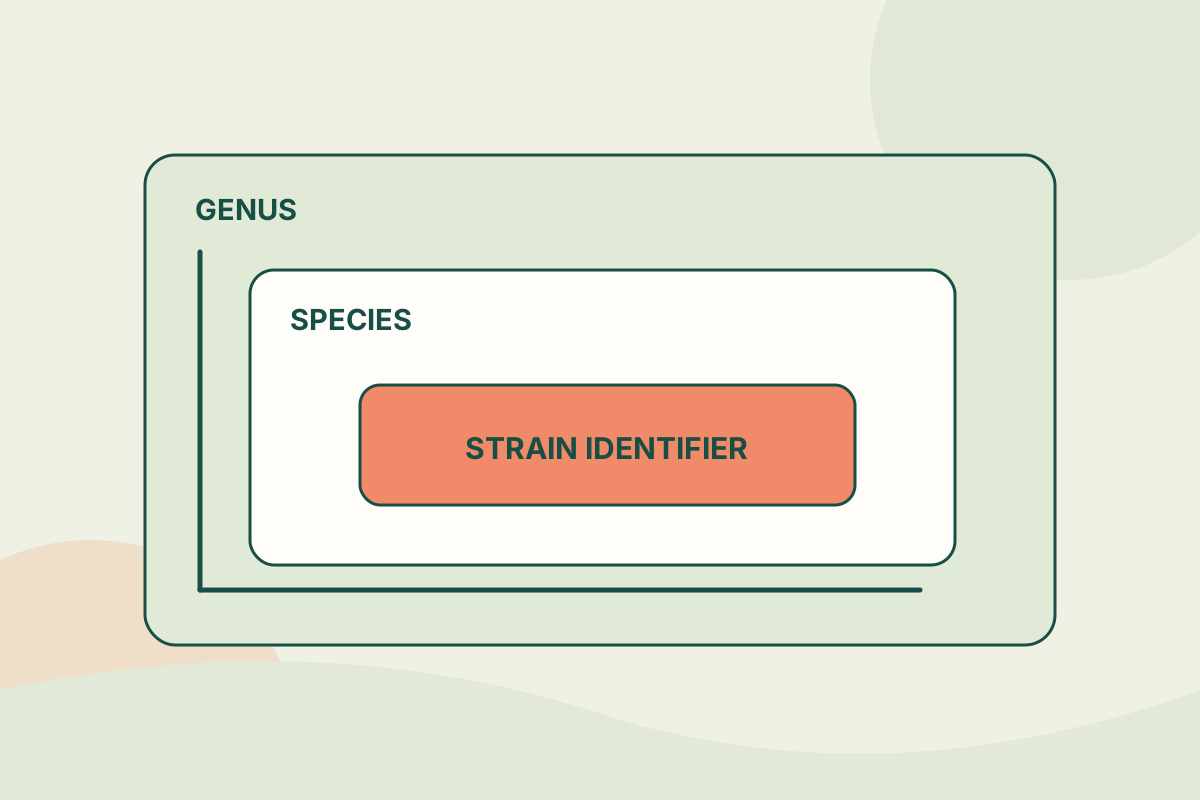
A microbial name on an oral supplement can contain several layers of information. The species is not always the full identifier, and a familiar name does not prove that the product matches a study. This guide focuses on naming and evidence matching. Live-count timing and storage are covered separately in our probiotic label guide.
Copy the full identifier
NIH explains that probiotic microorganisms can be identified by genus, species, and strain. Copy the complete text as shown rather than dropping a letter-and-number code that looks unimportant. Such a code may be part of the strain identifier needed to understand which organism is being discussed.
If a label supplies only a broad name, record that level of detail honestly. Do not infer a strain from a study that happens to use the same species. The right comparison begins with the identifiers disclosed by the package, not the identifiers you would like it to contain.
Keep identity and amount on separate lines
A detailed organism name and a clear quantity answer different questions. One tells you what is identified; the other tells you how much the label declares on a specified basis. A mixture may give a total without identifying an individual amount for every component. Do not allocate an equal share to each listed organism.
For inactivated preparations, do not assume that a CFU number is the appropriate quantity field. The preparation needs to be characterized in terms relevant to its category. Our category guide explains that distinction. Here, the practical task is to copy the package’s stated amount and unit without changing what they measure.
| Check | Record | Why it helps |
|---|---|---|
| Identity | Genus, species and strain if supplied | Avoid inferring a missing code |
| Quantity | Amount, unit and serving basis | Do not split a mixture equally |
| Study match | Preparation, population and outcome | Separate category evidence from product evidence |
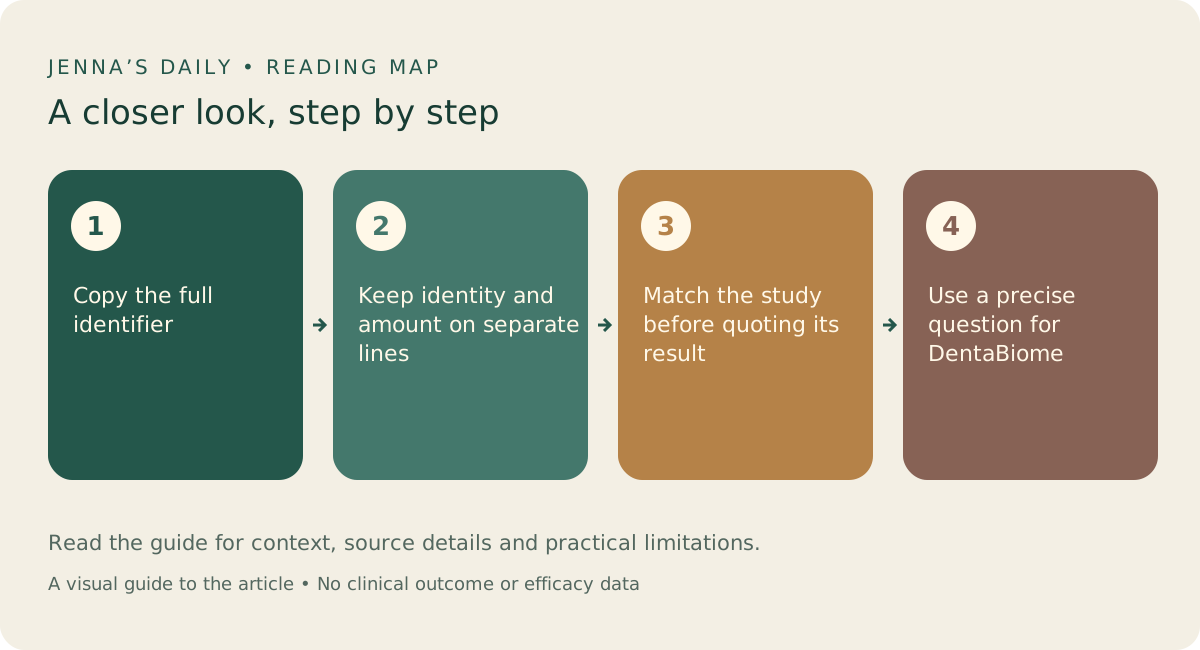
Match the study before quoting its result
When a seller cites research, compare the organism identifier, preparation, amount, directions, population, and measured outcome with the current product. A shared species name is only one part of that comparison. If important fields differ or are unknown, the study does not become a finished-product result simply through the presence of a familiar word.
You do not need to resolve every technical detail on your own to recognize a gap. Write the specific mismatch or missing field and ask the seller for the relevant source. If the answer is a broad review of a microbial category, preserve that distinction instead of presenting it as a trial of the product in your cart.
Use a precise question for DentaBiome
DentaBiome’s current complete identifiers and quantities have not been verified in our record. Ask for the full current label and the study references behind any specific claim. Do not supply codes from a competitor or assume that a postbiotic marketing term identifies the same material used in an unrelated probiotic study.
Bring the actual label and source to your dental professional if you need help deciding whether a claim is relevant to your care. This article is an information-reading tool, not a recommendation to take a particular organism. Clear naming can improve a discussion, but it cannot by itself demonstrate safety, suitability, or a dental outcome.
Make missing identifiers visible
In a comparison sheet, give the organism name, strain code, preparation, and amount separate cells. If the package omits a code, write not disclosed rather than copying a familiar code from a paper. This small formatting choice prevents a tidy table from making a study match look more certain than the underlying label information allows.
Sources & further reading
- NIH Office of Dietary Supplements: Probiotics — Health Professional ↗
- ISAPP consensus statement: Definition and scope of postbiotics ↗
- ISAPP: What is a postbiotic? ↗
Manufacturer information, when cited, is a commercial source. It does not establish that a finished product is clinically effective.