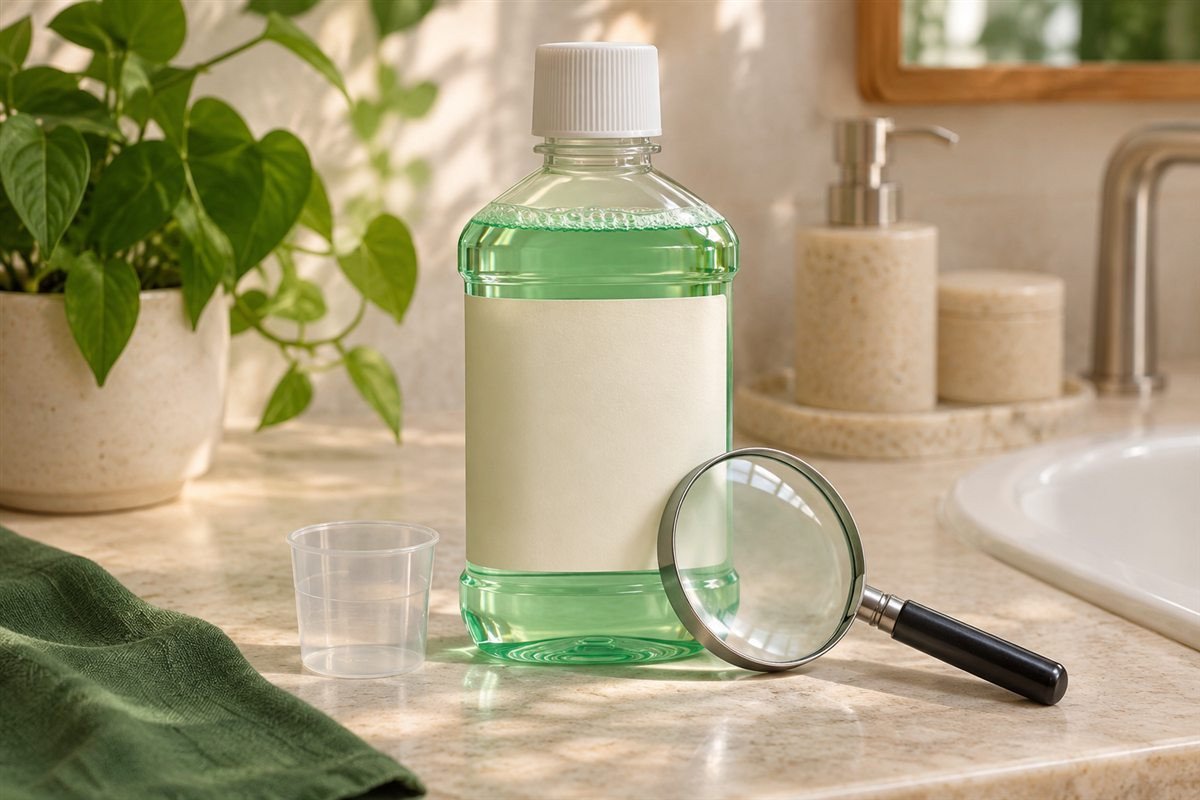
A strong mint taste is an experience, not a complete description of what a mouthwash is intended to do. Two bottles on the same shelf may serve different purposes even if both promise a fresher-feeling mouth. This adult-focused guide explains the cosmetic and therapeutic distinction, then shows how to compare labels without turning a flavor preference into a dental recommendation. It does not choose a product or prescribe a rinsing schedule.
Start with the purpose: cosmetic or therapeutic?
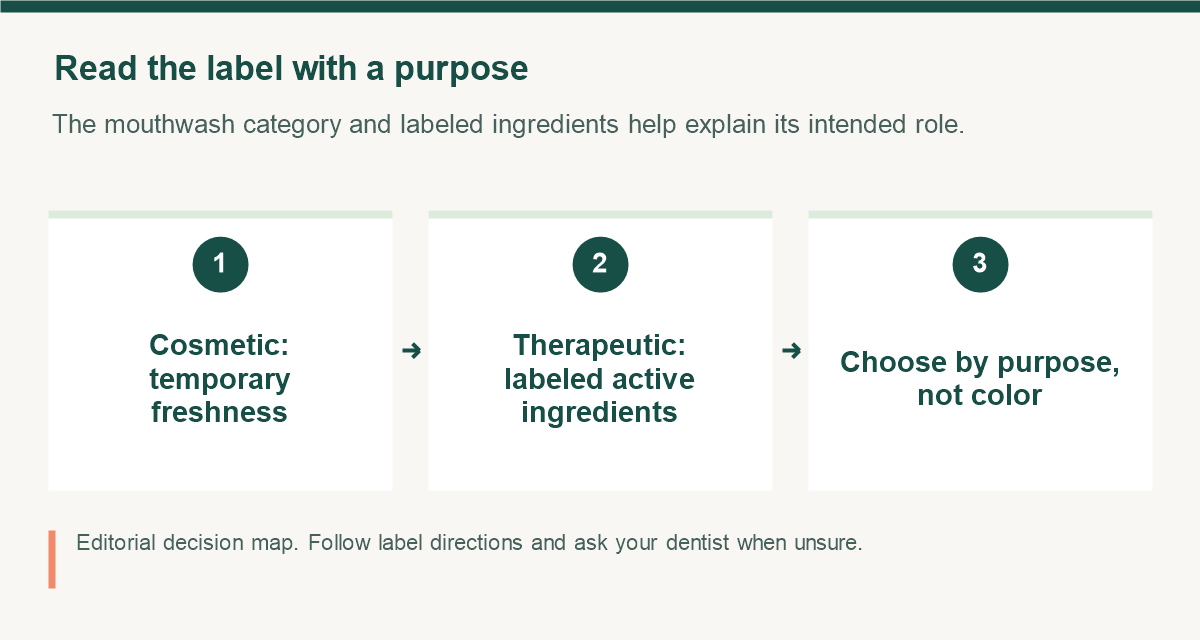
The ADA’s MouthHealthy guidance separates mouthwashes into cosmetic and therapeutic types. A cosmetic rinse may temporarily improve breath or leave a pleasant taste, but that temporary effect does not mean it reduces the risk of cavities or gum disease. A therapeutic rinse has active ingredients intended for particular oral-health purposes. The useful question is which purpose the actual product states, not which bottle looks most clinical.
Write down one reason you are considering a rinse. You might want a temporary fresh taste, have a specific question about cavity prevention or be following a dentist’s recommendation. Those are different starting points. If your note says only that you want the strongest product, make the question more concrete before comparing brands. A more intense sensation does not tell you which need the product addresses.
Match the claim with the active-ingredient information
The ADA’s professional mouthrinse guidance gives fluoride as an example used for cavity prevention and identifies cetylpyridinium chloride, chlorhexidine and certain essential oils in antimicrobial formulations. These examples explain why the active-ingredient line matters; they are not a recommendation to choose one ingredient.
| Label question | What to record | What not to assume |
|---|---|---|
| Is the purpose cosmetic? | The stated temporary breath or taste benefit | Fresh flavor establishes cavity or gum-disease protection |
| Does the label state a therapeutic purpose? | The exact purpose and active ingredient | Every therapeutic rinse addresses every oral-health concern |
| Is this a prescription product? | The prescribed product and professional directions | A store-bought bottle is an interchangeable replacement |
Use the table as a recording tool, not a ranking system. Two products can both answer their own label questions clearly without being appropriate substitutes. If you cannot connect an unfamiliar claim with the product information, put that question on the comparison sheet instead of filling the gap from another brand’s advertising.
Read the whole label before fitting it into your day
A useful comparison gives purpose, instructions and restrictions their own space. Keep the original package or a readable photograph available while you make notes. If you are comparing a listing with a bottle at home, confirm that you are looking at the same product rather than a similarly named variant.
- Exact product name and whether it is cosmetic, therapeutic or prescribed.
- Stated purpose and any listed active ingredient.
- Directions for the amount, contact time and frequency specified for that product.
- Warnings, precautions and age restrictions printed on the label.
- Any instructions about timing relative to other oral-care products.
- One unanswered question to take to your dentist or pharmacist.
Leave an unclear field unresolved. For example, if you remember a dentist recommending a category of rinse but not the exact product, ask for clarification rather than reconstructing the instruction from a shop display. This small step can prevent a tidy shopping list from concealing a missing part of the care plan.
Keep rinsing separate from brushing and cleaning between teeth
MouthHealthy explains that mouthwash can be an addition for some people, not a replacement for brushing and flossing. Its flossing guide describes purpose-made options for cleaning between teeth, including traditional floss, small brushes and water flossers. If a step in that routine is difficult, ask about a suitable tool or technique rather than treating a pleasant rinse as evidence that the task is complete.
Imagine returning late from work with a toothbrush, interdental cleaner and rinse on the counter. The bottle may be the quickest item to pick up, but convenience does not make the three tasks identical. Our oral-care routine guide looks at the essentials together. Here, keep your comparison narrower: what additional job, if any, would this particular mouthwash do?
An oral supplement, a chewable tablet and a mouthrinse are also different product formats. Do not carry an ingredient claim or use instruction from one format into another. A supplement advertisement beside an article is not a mouthwash recommendation or a reason to replace established dental care.
Treat taste and alcohol content as separate fields
Flavor can help you describe what you prefer, but preference and therapeutic purpose belong on different lines. An alcohol-free label alone does not tell you whether the rinse contains fluoride, which claim it makes or whether it fits a professional recommendation. Read those fields separately instead of turning one front-label feature into a complete judgment.
The ADA notes that therapeutic rinses may be available over the counter or by prescription, depending on the formulation. It also explains that the order of use can depend on the products involved. Follow the actual directions rather than adopting a universal before-or-after rule from a video. If instructions appear to conflict, ask a dentist or pharmacist to explain the intended sequence.
For an over-the-counter choice, MouthHealthy recommends looking for the ADA Seal of Acceptance. Record the purpose associated with that product. A seal is not a promise that every product is right for every person, and it should not be added to a comparison entry unless the specific package actually carries it.
Do not let a fresher taste delay a dental question
MouthHealthy’s bad-breath guide explains that ongoing bad breath or a persistent bad taste can have causes that need assessment, including gum problems or dry mouth. A temporary change after rinsing does not identify the cause. If breath remains a concern, make a dental appointment and bring the names of the products you have been using.
A useful final shortlist may contain one product to discuss, several unanswered fields or no purchase at all. Keep the label with your notes so the next conversation starts from the actual formulation and directions. The goal is a clearer decision about an optional step, not a shelf full of bottles that you cannot tell apart.
Sources & further reading
- American Dental Association: Mouthrinse (Mouthwash) ↗
- MouthHealthy from the ADA: Mouthwash ↗
- MouthHealthy from the ADA: Flossing ↗
- MouthHealthy from the ADA: Bad Breath ↗
Manufacturer information, when cited, is a commercial source. It does not establish that a finished product is clinically effective.